


The relief lasted exactly one week. On August 18, 2026 oil companies raised pump prices again, pushing gasoline up by P2.49 per litre, diesel by P3.84 and kerosene by P5.01, reversing the brief rollback drivers had enjoyed. The trigger is the same one that has defined the year at the pump: the Middle East conflict that closed the Strait of Hormuz and set crude oil on a war driven tear.
The latest hike, in plain numbers
The Department of Energy’s August 18 price adjustment was the sharp reversal of the previous week’s relief. Kerosene took the heaviest hit, up more than five pesos, while diesel and gasoline rose by roughly four and two and a half pesos respectively.
| Fuel | Change (18 Aug 2026) | Recent pattern |
|---|---|---|
| Kerosene | +P5.01 per litre | Heaviest weekly jump |
| Diesel | +P3.84 per litre | Reverses the prior rollback |
| Gasoline | +P2.49 per litre | Higher even after a down week |
The trend since the Iran war began
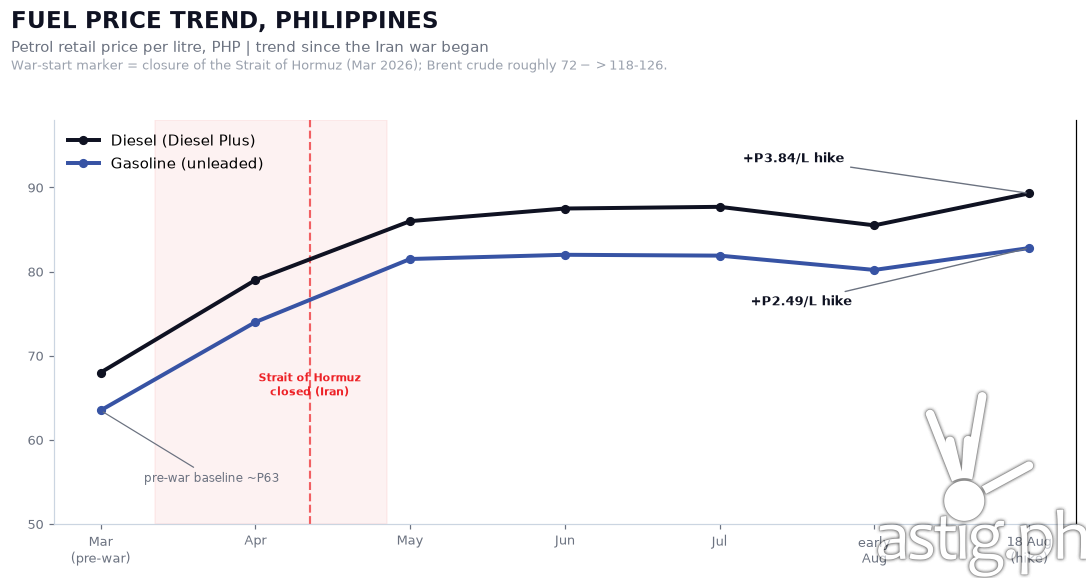
When Iran shut the Strait of Hormuz, roughly a fifth of global seaborne oil moved through that narrow channel, and Brent crude climbed from around 72 dollars toward a peak above 118. Philippine pump prices followed that curve. Retail averages climbed through spring, and the war’s supply shock has kept a floor under prices ever since; in NCR alone, the average diesel price rose from about 80.3 pesos a litre in June to 83.9 in July, and the August hike pushes the trend higher again.
Where Philippine pump prices stand now
- Gasoline now ~P83 per litre (unleaded, after +P2.49)
- Diesel ~P89 per litre (Diesel Plus, after +P3.84)
- NCR average diesel was P83.9 in July, up from P80.3 in June
- Crude risk stays high while Hormuz remains closed
What it means for the weeks ahead
The pattern is a war driven yo yo: a rollback one week, a bigger hike the next, because the market is pricing a supply risk that has not gone away. For a related look at the broader picture, the earlier August 18 fuel hike report lays out the weekly change, and the numbers here show the longer arc. Until the shipping lanes reopen, Filipinos should expect fuel, and the transport and goods costs that ride on it, to keep swinging.


