

The smartest way to buy a TV in 2026 is not to pick the biggest screen in your price range, but to find where price, size and panel technology meet. This deep dive into Philippine retail prices for OLED, Mini-LED and QLED-LCD TVs, using TCL and Samsung as reference brands, shows that value is not linear and the sweet spot is very real.
The three technologies in one line each
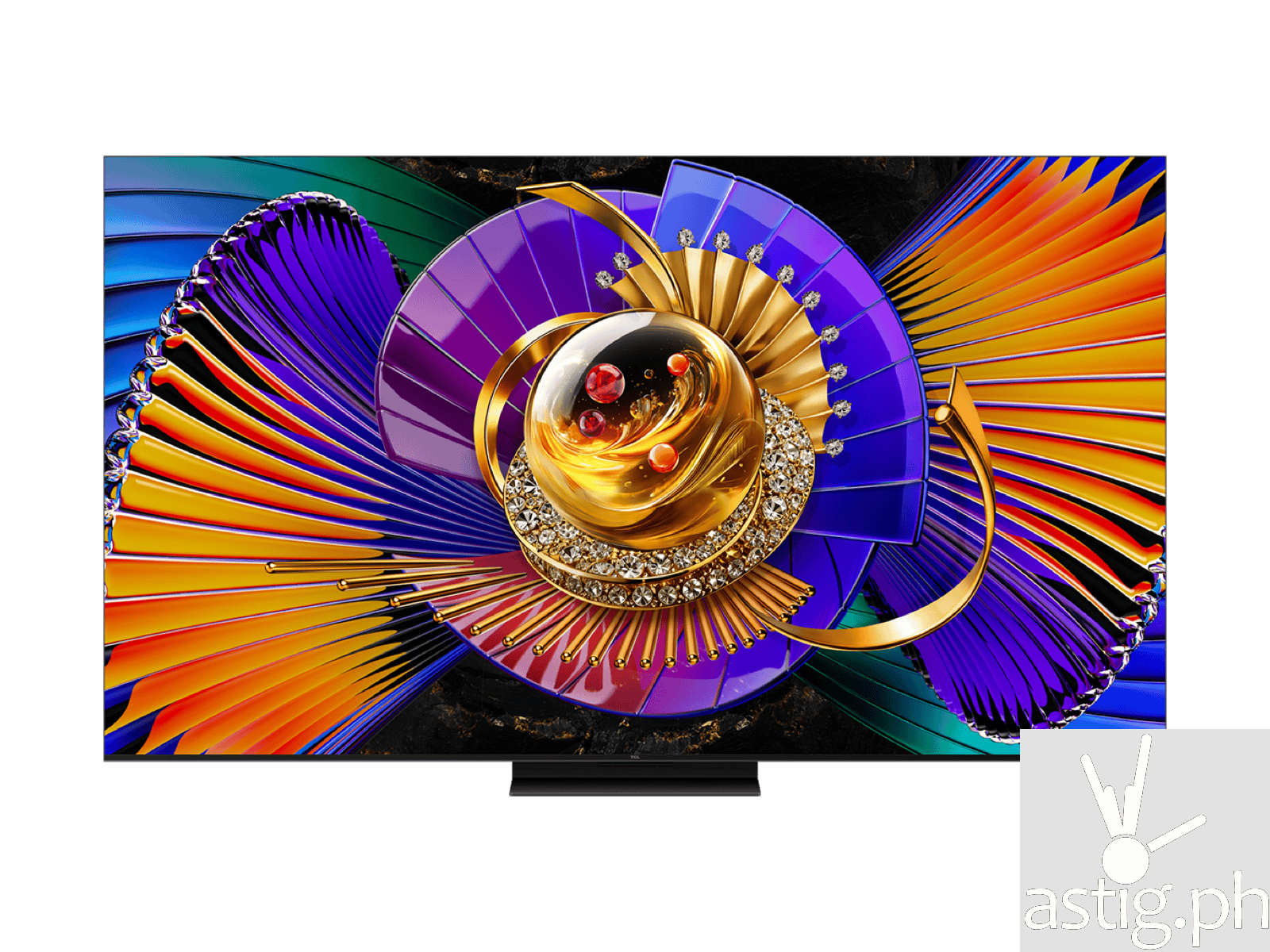
A standard LED / LCD TV backlights its whole panel evenly, which is cheap but makes bright and dark scenes wash together. A QLED adds a quantum dot color layer for richer, brighter color, still with a simple backlight. A Mini-LED splits that backlight into hundreds or even a thousand small dimming zones, so it can darken parts of a scene independently, getting much closer to OLED contrast without OLED’s cost. TCL explains the SQD label as its Super Quantum Dot version of this, and Samsung pushes the same idea as Neo QLED. True OLED lights each pixel itself for the best blacks and contrast, and charges the most for it.
Verified Philippine prices: what each tier costs
The figures below are verified retail prices in the Philippine market, using TCL and Samsung as examples, so the proportions reflect what a shopper actually pays.
| Tier | Example | Size | PH retail |
|---|---|---|---|
| QLED (value) | TCL 55P81L QLED | 55″ | P28,992 |
| QLED (value) | Samsung Q8F QLED | 55″ | P29,992 |
| QLED (value) | TCL 65P71L QLED | 65″ | P43,992 |
| Neo QLED | Samsung QN80H | 55″ | P76,491 |
| Mini-LED | TCL C7L | 55″ | P61,995 |
| Mini-LED | TCL C7L | 65″ | P69,995 |
| Mini-LED | TCL C7L | 75″ | P99,995 |
| Mini-LED | TCL C7L | 85″ | P135,995 |
| OLED | Samsung S90H (est.) | 65″ | ~P128,000-143,000 |
| Viewing area gain (what you actually see) | |||
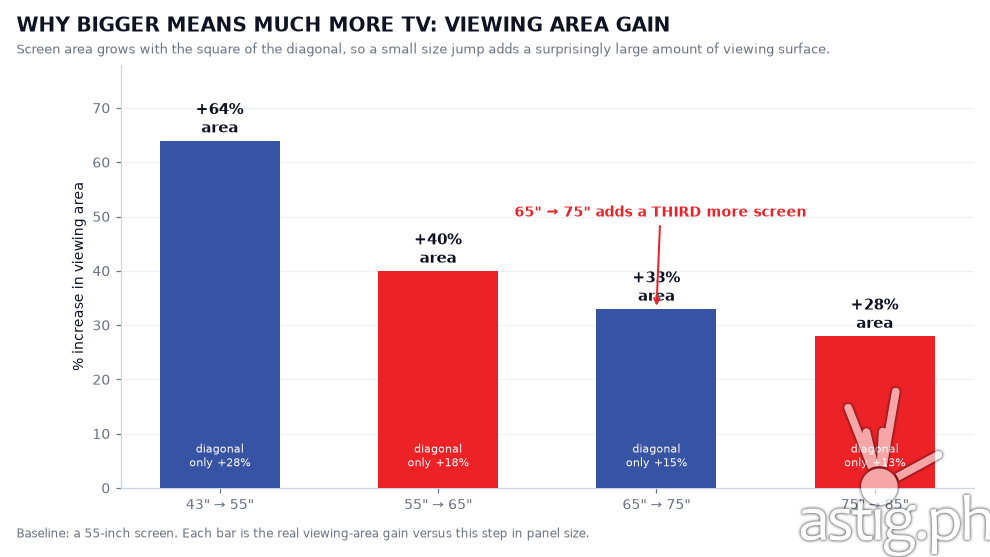
| 55″ to 65″ | +40% more screen area | ||
| 65″ to 75″ | +33% more screen area | ||
| 75″ to 85″ | +28% more screen area | ||
Prices are indicative retail (Abenson, Anson’s, TCL Philippines); deals and promos move them. The OLED figure is marked as an estimate because retail pricing fluctuates widely.
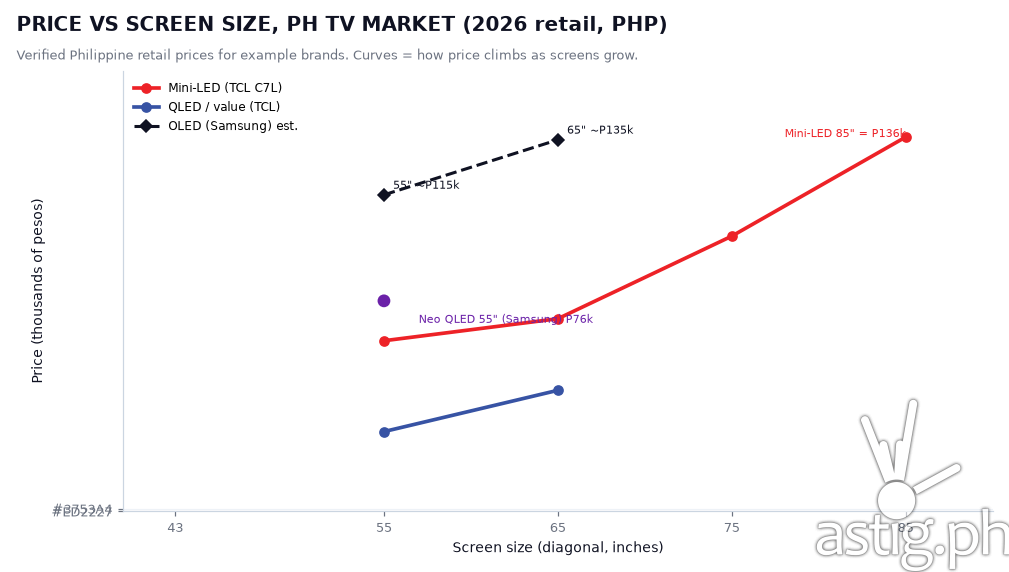
Graph 1: how price climbs with size
Price does not rise in a straight line. TCL, the panel volume leader in the Philippines, prices its C7L Mini-LED line so that each jump in size costs meaningfully more, which is typical of every brand and every panel tech.
Graph 2: the value sweet spot
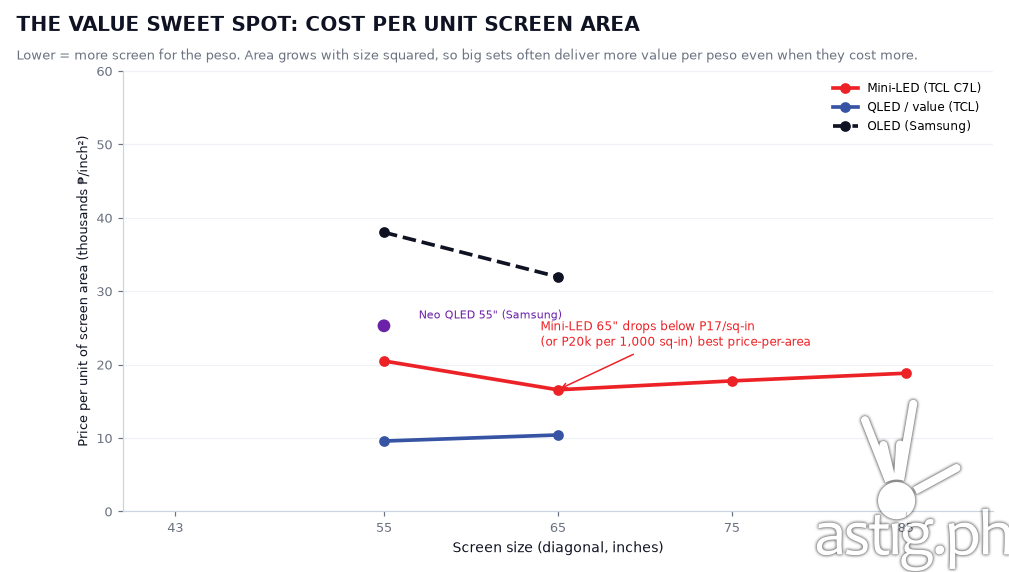
The more useful way to read a TV price is cost per unit of screen area, because a 65-inch screen has nearly 40 percent more area than a 55-inch. Plotted that way, the 65-inch Mini-LED sweet spot becomes obvious: it delivers the most screen for the least money per unit area, and jumping to 75 or 85 inches buys genuinely more screen but at a rising premium.
What Samsung’s premium tier shows
Samsung’s line shows the top end of the market. Neo QLED pricing like the 55-inch QN80H at about 76,000 pesos lands well above standard QLED and approach the 55-inch Mini-LED C7L, while Samsung OLED sits higher still. For most Filipino buyers the practical question is not whether OLED is better, it is whether OLED’s extra premium is worth it in a room they often watch in daylight, where Mini-LED brightness often delivers more visible benefit.

The verdict: where the sweet spot really is
Three answers depending on budget. Under 30k: a 55-inch QLED is the value king, and the entry tier below it is where truly budget buyers live. Mid premium: the 65-inch Mini-LED is the standout choice, the best balance of price, size and picture on the market today. Flagship: OLED wins if budget is no object and the room can be darkened. The rule of thumb that never fails: let cost per square inch make the decision for you, then buy the biggest panel your wall and wallet will honestly take.